


Our environmental approach with Eco Impact
Since January 2024, Eco Impact has been supporting Belveo in the context of the Eco Design Diagnostic , an initiative of BPI France, which aims to train teams in eco-design and allows us to work on reducing the environmental impact of our products through the carrying out of life cycle analyses (LCA).

The first step in this support process was training the entire Belveo team on the key concepts of eco-design. This training reminded us of the challenges of climate change and the levers for action at the company level to limit our environmental impact. We also learned that Life Cycle Assessment (LCA) is one of the methods that allows us to understand the environmental impact of our products. The goal is to clearly identify the impacts (on air, water, ozone, soil, etc.) of each stage of our products' life cycle: from raw material extraction to end-of-life, including manufacturing, warehousing, delivery to the end customer, and use. This approach goes beyond a carbon footprint analysis because it incorporates a multi-criteria study of environmental impacts (CO2 emissions, air, water, and soil pollution, etc.).
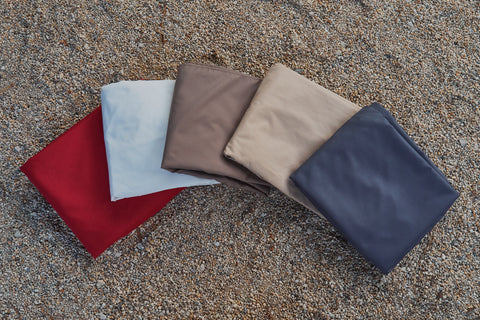
Once the Belveo team was involved in these fundamental issues, the second step was to carry out several LCAs of our products with the help of the Eco Impact team , which allowed us to quickly identify that we needed to act as a priority on replacing our polyester parasol canopies, for example.
The third step was to identify a flagship product whose environmental impact we wanted to study in depth. The goal was to identify areas for reduction, drawing on the results of the Life Cycle Assessment (LCA) and through a collaborative workshop. These workshops allowed us to rethink the design, sourcing, and materials of the outdoor furniture for our first outdoor furniture collection, which we plan to launch in 2025. The involvement of multiple stakeholders from design, sales, finance, and purchasing enabled us to take a holistic and comprehensive approach to reducing environmental impact.
We are currently implementing as many internally identified eco-design strategies as possible to ensure that Eco Impact's support has the greatest possible positive impact. The next steps will involve training two internal staff members on Eco Impact's eco-design tool , enabling the team to independently conduct and iterate life cycle assessments (LCAs) and further reduce the environmental impact of our products.


