


What color parasol should I choose to protect myself from the sun?
Summer is fast approaching, and you've decided to invest in a parasol to enjoy sunny days in your outdoor space, sheltered from the sun. A multitude of parasol models are available on the market, whether cantilever or straight , with round , rectangular , or square canopies. So, with all these options, how do you make the right choice?
Dark colors and light colors: what are the differences?
To protect yourself effectively against UV radiation , it is crucial to use parasols, wear clothing with a UV protection rating, apply sunscreen, and avoid sun exposure during the hottest hours of the day.
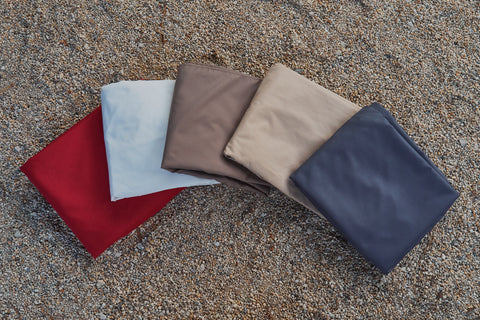
In general, dark colors absorb more UV light than light colors for parasols. Dark tones such as black, red, blue, and green have a higher UV absorption rate than light tones like white, yellow, and beige. Therefore, a dark-colored canopy, such as a black parasol, is more effective and generally offers a higher UPF rating. In comparison, a light-colored parasol canopy provides less UV protection.
This is explained by the fact that dark pigments absorb a significant amount of light across all wavelengths, while light-colored pigments absorb only a limited amount.
When choosing your parasol, it is crucial to ensure that it effectively protects you from the sun. To do this, it is essential to check that the parasol offers effective protection against high UV index rays.

Ultraviolet (UV) light
Ultraviolet light is a form of energy emitted by the sun. It is invisible to the human eye but can be detected by certain measuring instruments; this is referred to as the UV index. There are three types of UV radiation: UVA, UVB, and UVC.
UVA rays make up the majority of UV light that reaches the Earth's surface. They penetrate deep into your skin and are responsible for wrinkles and skin discoloration. They have also been linked to certain types of cancer.
UVB rays are less intense than UVA rays, but they cause sunburn and an increased risk of skin cancer. They are more effectively blocked by the ozone layer than UVA rays, but unfortunately, the ozone layer is deteriorating rapidly.
UVC rays are the most dangerous, but fortunately they are blocked by the ozone layer and do not reach the Earth's surface.
Excessive sun exposure without sun protection can damage skin cells , which can lead to long-term damage and an increased risk of cancer.
For better protection against UV rays, dark colors are more effective than light colors, offering excellent SPF protection. Therefore, it is recommended to choose dark colors for your parasol canopy, such as black , anthracite gray , blue , or taupe .
Regarding the perceived heat under a parasol canopy, light-colored canopies tend to offer a more pronounced feeling of coolness compared to dark ones. This difference is explained by the fact that light colors reflect more of the sun's radiation, while dark colors absorb more heat. Thus, being under a light-colored canopy can give the impression of enjoying a more refreshing shaded area. This is an important aspect to consider when choosing a parasol for sun protection.
The fabric's weave can also affect the feeling of coolness. Indeed, a more open weave dissipates heat better but will generally be more vulnerable to rain.
The different types of canvas and their characteristics
It is also crucial that the parasol be made with a high-quality fabric that is weather-resistant and fade-resistant. Various types of fabric are used for parasol manufacturing, each with its own characteristics in terms of UV resistance.
Polyester is a common material used for parasol canopies and outdoor blinds. Polyester fabrics are water-repellent and easy to clean . However, they are not colorfast unless they are solution-dyed. The colorfastness of polyester fabric is lower than that of olefin and acrylic fabrics. It is still adequate if its use is limited to a few weeks per year.
Olefin is a material used in the manufacture of parasol canopies due to its remarkable properties. Olefin fabric is used for its high resistance to weathering and UV rays , in addition to its ease of maintenance. This synthetic fiber offers exceptional sun protection , ensuring optimal durability so you can enjoy the outdoors with complete peace of mind. It is also colorfast .
Acrylic is a Made from high-quality synthetic material, it stands out for its excellent resistance to weathering and UV rays, making it ideal for outdoor use. Its lightness and ease of maintenance make it a perfect choice to enhance your outdoor space while ensuring exceptional durability. All our acrylic fabrics are fade-resistant.
Finally, cotton is a highly prized material for parasols, offering breathability and comfort. It has a very good environmental impact and is also waterproof. However, it is not very resistant to UV rays, which cause it to fade and, more importantly, damage its fibers, leading to tears after one or two seasons. Cotton is not as water-resistant as olefin and acrylic.
Conclusion
A parasol is an essential piece of equipment for effective protection against harmful UV rays. Choosing a parasol with a colored canopy is crucial for providing effective shade from the sun and improving your outdoor comfort.
It is essential to choose a parasol that offers optimal protection against UV radiation, opting for a dark-colored canopy ( black , anthracite grey , blue or taupe ). The darker the canopy, the higher the UPF rating.
It is possible to modulate the feeling of warmth depending on the color of the fabric, but UV protection should not be forgotten when choosing the latter.
In addition, the fabric must be resistant to climatic conditions such as rain and heat.
By taking into account both UV protection and the characteristics of the fabric, you can select the parasol that best meets your needs, thus ensuring a safe and comfortable summer for all.
For any other questions about Belveo products , please feel free to contact us: contact@belveo.com


